Timeline of Jesus’ Crucifixion and Passover: A Detailed Overview
Delve into a comprehensive biblical exploration, accessing a free PDF guide detailing the events surrounding Jesus’ crucifixion and its profound link to Passover traditions.
Historical Context of Passover
Passover, or Pesach in Hebrew, commemorates the liberation of the Israelites from slavery in ancient Egypt. This pivotal event, detailed in the Book of Exodus, isn’t merely a historical recollection but a foundational narrative shaping Jewish identity. The observance centers around a ritual meal – the Seder – recounting the story of the Exodus, emphasizing themes of freedom, redemption, and God’s faithfulness.
Historically, Passover is intrinsically linked to the spring equinox and the agricultural cycle in the Land of Israel. The timing reflects the barley harvest, signifying a new beginning and renewal. The sacrificial lamb, central to the original Passover observance, represented a direct act of divine protection during the final plague inflicted upon Egypt.
Understanding this historical and theological backdrop is crucial when examining the timing of Jesus’ crucifixion. Scholars debate whether the Last Supper was a traditional Passover Seder, or a meal held before Passover, influencing interpretations of the events surrounding his death and resurrection. Accessing detailed PDF resources can illuminate these complex historical nuances.
The Significance of Passover in Jewish Tradition
Passover transcends a simple retelling of historical events; it’s a deeply ingrained spiritual experience for Jewish people worldwide. The Seder meal isn’t just about eating symbolic foods – it’s a meticulously orchestrated ritual designed to actively engage participants in the Exodus narrative. Each element, from the matzah (unleavened bread) to the maror (bitter herbs), represents a facet of the Israelites’ suffering and ultimate liberation.
The Haggadah, the text used during the Seder, compels participants to ask questions, fostering intergenerational dialogue and ensuring the story remains relevant. Passover emphasizes themes of freedom, justice, and the responsibility to remember and act on behalf of the oppressed. It’s a celebration of God’s covenant with the Jewish people and a reaffirmation of their enduring faith.
Exploring PDF guides dedicated to Passover reveals the intricate layers of meaning embedded within this ancient tradition, providing context for understanding its potential significance in relation to the events surrounding Jesus’ crucifixion and resurrection.
The Date of Jesus’ Crucifixion: A Historical Debate
Determining the precise date of Jesus’ crucifixion remains a complex historical challenge, sparking ongoing scholarly debate. Traditionally, it’s associated with the Jewish Passover, but pinpointing the exact year – and even the day within Passover week – is contentious. Some argue for a Friday crucifixion during the Passover week, aligning with the Gospel accounts of his death and resurrection on the third day.
However, alternative theories propose a different timeline, suggesting Jesus’ last supper wasn’t a traditional Passover Seder, and his crucifixion occurred a day or two before Passover. This hinges on differing interpretations of calendrical systems and the political climate under Pontius Pilate;
Numerous PDF resources delve into these intricacies, examining biblical texts, historical sources like Josephus, and archaeological evidence. These studies highlight the difficulties in reconciling Gospel narratives with known historical events, emphasizing the need for careful analysis and acknowledging the inherent uncertainties surrounding this pivotal moment in history.

The Synoptic Gospels and the Timing of the Last Supper
The Synoptic Gospels – Matthew, Mark, and Luke – present a relatively consistent narrative regarding the Last Supper’s timing, generally portraying it as occurring on the evening before the traditional Passover Seder. This suggests Jesus celebrated a meal with his disciples that was related to, but distinct from, the formal Passover observance.
Scholars debate whether this meal was a Seder in progress, a pre-Passover meal anticipating the holiday, or a completely separate event. Many PDF guides explore the textual nuances within these Gospels, analyzing the descriptions of the meal’s components and the surrounding events to determine its precise nature.
The timing is crucial because it impacts the understanding of Jesus’ crucifixion date. If the Last Supper was a pre-Passover meal, it supports a crucifixion occurring on the day before Passover, while a Seder-like meal suggests a crucifixion coinciding with the Passover sacrifice. Detailed analyses available in scholarly PDFs offer varying perspectives on this critical point.
John’s Gospel and a Different Passover Timeline
John’s Gospel presents a significantly different timeline concerning the Last Supper and Passover compared to the Synoptic Gospels. John explicitly states that Jesus was crucified during the time of Passover, specifically when the lambs were being sacrificed in the Temple. This places the crucifixion on 14 Nisan, the day of the Passover sacrifice itself.
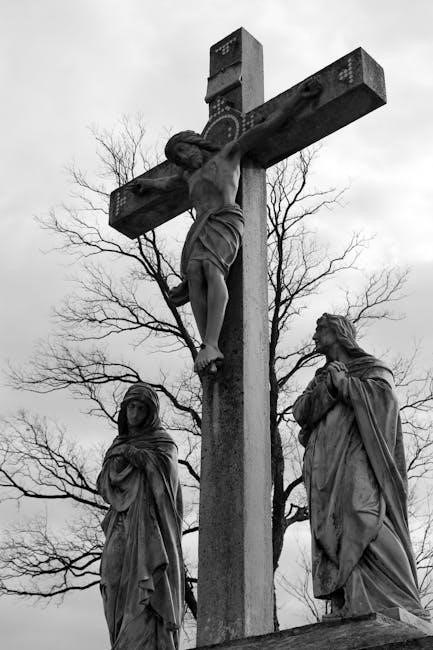
This divergence has fueled extensive debate among biblical scholars. Many PDF resources dedicated to New Testament chronology explore the reasons for this discrepancy, suggesting different calendrical systems or theological emphases. John’s portrayal emphasizes Jesus as the ultimate Passover Lamb, whose sacrifice fulfills the Old Testament ritual.
Understanding John’s unique perspective requires careful examination of his narrative and its implications for the crucifixion’s timing. Numerous PDF guides offer detailed textual analyses and historical context, helping readers navigate this complex issue and appreciate the distinct theological message conveyed by John’s Gospel.
The Events Leading to the Crucifixion
Explore detailed PDF resources outlining the pivotal moments—the Last Supper, Gethsemane arrest, Sanhedrin trial, and Pilate’s decision—that inexorably led to Jesus’ crucifixion.
The Last Supper: A Passover Seder?
A central question in understanding the timeline revolves around whether the Last Supper was a traditional Passover Seder. Scholarly debate intensifies when examining the Synoptic Gospels (Matthew, Mark, and Luke) versus John’s Gospel, each presenting a slightly different sequence of events. PDF guides often highlight this discrepancy, noting the Synoptics suggest the Last Supper preceded Passover, while John implies it occurred during the Passover meal itself.
If the Last Supper was a Seder, it would have included the ritual elements of unleavened bread (matzah) and wine, symbolically representing the Exodus from Egypt. Jesus’ reinterpretation of these elements – the bread as his body and the wine as his blood – adds a profound theological layer. Detailed PDF analyses explore how this reinterpretation transforms the Passover meal into a commemoration of a “new exodus,” a spiritual liberation through his sacrifice.
Furthermore, understanding Jewish customs of the time is crucial. The Jewish calendar is lunisolar, meaning the date of Passover varies. Resources available in PDF format meticulously examine the possible dates and how they align with Roman practices of crucifixion, offering a nuanced perspective on the historical context.
Jesus’ Arrest in the Garden of Gethsemane
Following the Last Supper, Jesus retreated with his disciples to the Garden of Gethsemane to pray. This event, meticulously detailed in the Gospels, marks a pivotal moment leading directly to his crucifixion. PDF resources often emphasize the emotional and spiritual weight of this night, highlighting Jesus’ anguish and acceptance of his impending fate.
Judas Iscariot, one of Jesus’ twelve disciples, betrayed him to the Jewish authorities, identifying him with a kiss. This act facilitated Jesus’ arrest by a detachment of temple guards and Roman soldiers. Comprehensive PDF guides explore the political complexities of this arrest, noting the involvement of both Jewish and Roman authorities.
The timing of the arrest is crucial to the Passover timeline. It likely occurred after nightfall, placing it within the timeframe of Passover preparations. Scholarly PDF analyses debate whether the arrest was deliberately timed to avoid violating Passover regulations regarding capital punishment. The subsequent events unfolded rapidly, setting the stage for Jesus’ trials and eventual crucifixion.
The Sanhedrin Trial and Accusations Against Jesus
After his arrest, Jesus was brought before the Sanhedrin, the Jewish high court, for preliminary questioning. Detailed PDF studies of this trial reveal a complex legal and religious proceeding, fraught with tension and political maneuvering. The accusations leveled against Jesus primarily centered around blasphemy – claiming to be the Son of God – and inciting rebellion against Roman rule.
The Sanhedrin lacked the authority to carry out capital punishment under Roman law, so their proceedings were largely aimed at gathering evidence to present to Pontius Pilate. PDF resources often highlight the inconsistencies and irregularities within the Sanhedrin’s trial, questioning its fairness and legality. Witnesses were brought forward, but their testimonies were often conflicting.
The timing of the trial is significant in relation to Passover. The Sanhedrin likely convened an emergency session, potentially violating customary practices due to the urgency of the situation. Scholarly PDF analyses explore the motivations behind the Sanhedrin’s actions, considering both religious and political factors influencing their decision to condemn Jesus.
Pilate’s Role in the Crucifixion Decision
Pontius Pilate, the Roman prefect of Judea, held the ultimate authority to authorize Jesus’ crucifixion. Comprehensive PDF guides detail Pilate’s reluctance, as portrayed in the Gospels, and his attempts to avoid making a decision. He questioned Jesus, finding no grounds for a capital offense, yet faced mounting pressure from the Sanhedrin and a restless crowd.
The accusations presented to Pilate were altered to focus on Jesus’ claim to be King of the Jews, a direct challenge to Roman authority. Detailed PDF analyses suggest Pilate feared unrest and potential rebellion if he appeared weak or sympathetic to Jesus. He attempted to appease the crowd by offering them a choice between releasing Jesus or Barabbas, a known criminal.
Ultimately, Pilate yielded to the demands of the mob, ordering Jesus’ crucifixion. Scholarly PDF resources debate Pilate’s motivations, ranging from political expediency to a cynical disregard for justice. His infamous handwashing symbolizes his attempt to distance himself from the responsibility for Jesus’ death, a gesture often scrutinized in historical and theological contexts.
The Crucifixion Itself
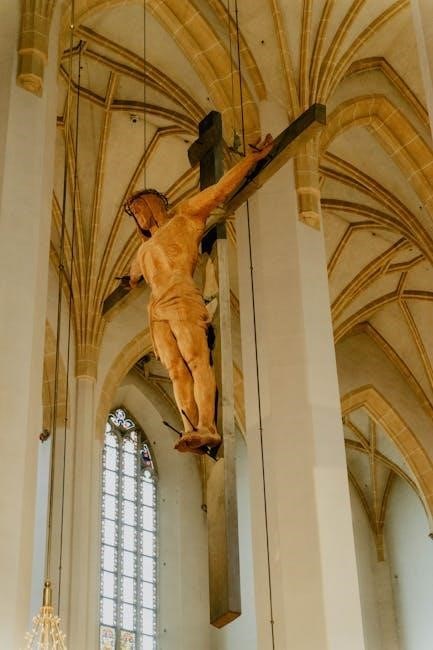
Explore detailed PDF resources outlining the brutal realities of Roman crucifixion, including scourging, the procession to Golgotha, and Jesus’ agonizing final hours and words.
The Scourging and Mockery of Jesus
Detailed PDF guides illuminate the horrific practice of Roman scourging, a brutal prelude to crucifixion intended to weaken and humiliate the condemned. These resources depict the agonizing physical torment inflicted upon Jesus, utilizing instruments like the flagellum – a whip with multiple leather or metal-tipped lashes.
Beyond the physical pain, the accounts, often detailed in downloadable scholarly articles, emphasize the profound psychological torment. Jesus endured not only the lashes but also the mocking and derision of Roman soldiers, who cruelly parodied his claim to kingship.
Historical analyses within these PDFs reveal this mockery wasn’t merely random cruelty; it was a deliberate attempt to undermine Jesus’ authority and publicly shame him. Soldiers crowned him with thorns, placed a reed as a scepter in his hand, and repeatedly hailed him as “King of the Jews” with biting sarcasm.
These resources connect this treatment to the prophecies found within the Old Testament, suggesting a deliberate fulfillment of suffering foreshadowed centuries before, offering a deeper understanding of the events leading to the crucifixion.
The Procession to Golgotha (Calvary)
Comprehensive PDF resources detail the arduous journey Jesus undertook to Golgotha, also known as Calvary – “the place of the skull.” Weakened by scourging and exhaustion, He was forced to carry His own cross, or at least the crossbeam (patibulum), through the crowded streets of Jerusalem.
Scholarly articles within these guides highlight the route’s likely path, believed to follow the Via Dolorosa (“Way of Suffering”) today. This path, meticulously mapped in downloadable resources, would have been a public spectacle, exposing Jesus to further ridicule and contempt from onlookers.

The procession wasn’t a solitary walk; Roman soldiers and a large crowd accompanied Jesus, adding to the emotional and physical strain. PDF analyses suggest the presence of women who mourned for Him, and Simon of Cyrene, compelled to assist Jesus in carrying the cross when He could no longer bear the burden.
These resources emphasize the symbolic weight of this journey, representing Jesus’ ultimate sacrifice and foreshadowing His ascent to glory, offering a profound understanding of this pivotal moment.
The Crucifixion: Method and Details
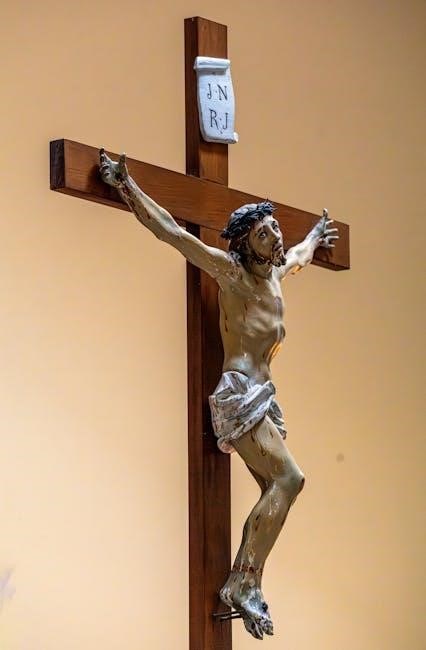
Detailed PDF guides meticulously outline the Roman method of crucifixion, a brutal form of execution reserved for slaves, rebels, and criminals. Jesus was nailed or tied to the cross, causing excruciating pain as the body’s weight stretched the limbs.
Scholarly analyses within these resources explain the physiological effects – asphyxiation, dehydration, and shock – leading to eventual death. The cross’s position and the use of a titulus (inscription) proclaiming Jesus’ alleged crime are also explored.
Downloadable materials emphasize that crucifixion wasn’t simply about physical suffering; it was a public humiliation designed to deter others. The Roman soldiers mocked Jesus, further intensifying His ordeal, as documented in biblical accounts and supplementary PDF studies.
These resources clarify the typical timeframe of crucifixion, often lasting several hours, and the various stages of physical deterioration. Understanding these details, presented in accessible PDF formats, provides a sobering yet crucial perspective on Jesus’ sacrifice.
The Hours of Darkness and Jesus’ Final Words
Comprehensive PDF resources detail the unusual darkness that descended upon the land during the crucifixion, a phenomenon interpreted by some as divine judgment or a symbolic representation of spiritual darkness. These downloadable guides explore various theological perspectives on this event.
Scholarly articles, available as PDFs, analyze Jesus’ seven final statements from the cross, often referred to as “words from the cross.” These utterances reveal His suffering, forgiveness, trust in God, and concern for His mother and followers.
Detailed timelines within these PDFs correlate these statements with the specific hours of darkness, offering a chronological understanding of Jesus’ final moments. The significance of phrases like “My God, my God, why have you forsaken me?” is thoroughly examined.
Accessible PDF studies emphasize that these final words weren’t merely expressions of pain but profound theological declarations. They encapsulate the weight of sin, the fulfillment of prophecy, and the hope of redemption, providing a powerful conclusion to His earthly ministry.
The Connection to Passover
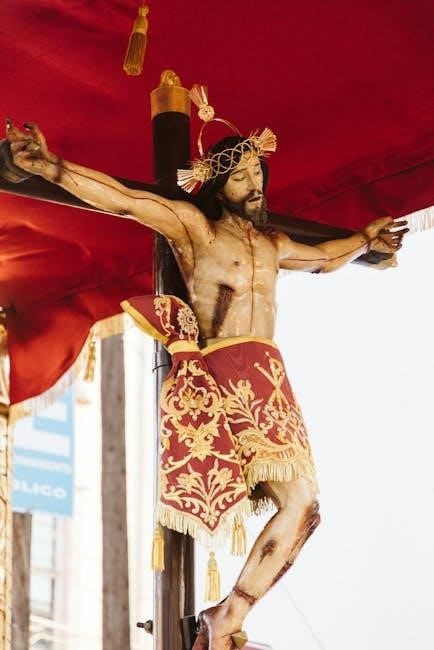
Explore PDF guides revealing Jesus as the ultimate Passover Lamb, fulfilling ancient prophecies and establishing a “new exodus” through His sacrifice and resurrection.
Jesus as the Passover Lamb: Theological Interpretation
Theological interpretations consistently portray Jesus as the antitype of the Passover lamb, a central figure in fulfilling Old Testament prophecies. Just as the Israelites were saved from physical bondage in Egypt through the sacrifice of a spotless lamb, humanity is redeemed from spiritual bondage through Jesus’ sacrificial death.
PDF resources often highlight how Jesus’ crucifixion coincided with the time of Passover, emphasizing the deliberate timing as divinely ordained. His suffering and death are seen not merely as a historical event, but as the ultimate Passover sacrifice, offering atonement for sin and paving the way for eternal life.
This interpretation draws heavily from the book of Exodus, particularly the account of the Passover ritual. The lamb’s blood protected the Israelites from the angel of death; similarly, Jesus’ blood offers protection from God’s wrath. Detailed PDF guides explore this parallel, demonstrating how Jesus embodies the complete and final sacrifice, rendering the Old Testament sacrificial system obsolete. The concept of Jesus as the Lamb of God is foundational to Christian theology, signifying His role as the savior of humankind.
The Fulfillment of Old Testament Prophecies
Numerous Old Testament prophecies find their fulfillment in the life, death, and resurrection of Jesus Christ, particularly concerning the timing of His crucifixion relative to Passover. PDF studies meticulously detail how prophecies regarding the Messiah’s suffering, rejection, and sacrificial death align with the events surrounding Passover.
Isaiah 53, for example, vividly depicts a suffering servant—widely interpreted as Jesus—who bears the sins of many. The prophetic calendar, as understood through Jewish tradition and explored in detailed PDF guides, points to a specific timeframe for the Messiah’s arrival and sacrifice, coinciding with the Passover season.
Furthermore, the Passover lamb itself was a prophetic symbol, foreshadowing Jesus as the ultimate sacrifice. Scholarly articles available as PDF downloads demonstrate how Jesus’ death on the cross fulfilled the symbolic meaning of the Passover lamb, offering complete and final atonement. This fulfillment underscores the belief that Jesus’ arrival was not accidental, but a divinely planned event meticulously foretold throughout scripture.
Resurrection and the New Exodus
Jesus’ resurrection, occurring after the Sabbath following His crucifixion, is understood as the “New Exodus” – a liberation far surpassing the Israelites’ escape from Egypt. PDF resources highlight this parallel, illustrating how Jesus, like Moses, led His people from spiritual bondage to freedom. The original Exodus delivered Israel from physical slavery; Jesus offers freedom from sin and death.
The timing of the resurrection, following Passover, is significant. Just as the Passover lamb’s blood secured freedom for the Israelites, Jesus’ blood, shed during Passover week, secures eternal life for believers. Detailed PDF guides explore the theological implications of this “New Exodus,” emphasizing the themes of redemption, renewal, and a new covenant.
Scholarly analyses, often available as PDF downloads, demonstrate how the resurrection transformed Passover from a remembrance of a past event into a celebration of a present reality – the ongoing liberation offered through faith in Jesus Christ. This new liberation extends to all nations, fulfilling God’s promise of blessing to all peoples.
Resources for Further Study: PDF Guides and Scholarly Articles
Numerous PDF guides and scholarly articles delve deeper into the complex relationship between Jesus’ crucifixion and the Passover timeline. These resources offer detailed biblical analysis, historical context, and theological interpretations, aiding a comprehensive understanding of this pivotal event. Several institutions provide free PDF downloads exploring the synoptic gospels and John’s differing accounts.
Academic databases and online theological libraries host scholarly articles examining the historical accuracy of Josephus’ account of Jesus’ crucifixion, alongside analyses of the Sanhedrin trial and Pilate’s role. PDF versions of these articles are often accessible through university websites or research platforms.
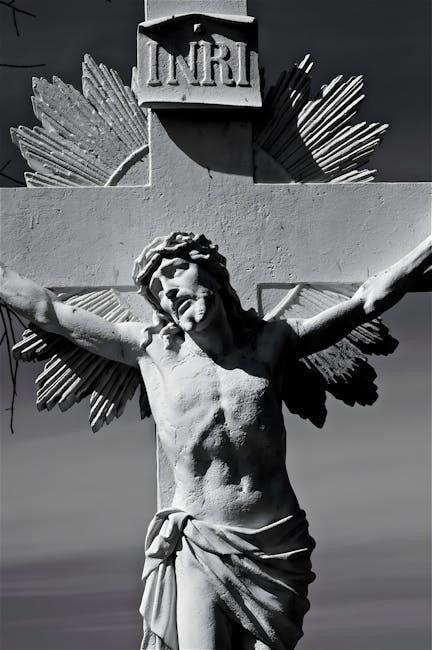
Furthermore, specialized PDF studies focus on the fulfillment of Old Testament prophecies related to the Passover lamb and the Messiah. These resources provide valuable insights into the symbolic significance of the Last Supper and the timing of Jesus’ death, enriching your exploration of this crucial intersection of history and faith.
Josephus’ Account of Jesus’ Crucifixion
Flavius Josephus, a first-century Roman-Jewish historian, provides a notable, though debated, external account of Jesus’ crucifixion in his Antiquities of the Jews (c. AD 93). His writings offer a crucial, albeit complex, historical perspective, often studied alongside PDF analyses of the text’s authenticity and potential Christian interpolations.
Josephus states that Jesus was crucified by Pontius Pilate at the urging of the Jewish leadership. While the precise wording has been subject to scholarly debate – with some portions believed to be later additions – the core assertion of Jesus’ crucifixion under Roman authority remains significant. PDF resources often present comparative analyses of different manuscript versions.
Understanding Josephus’ account requires careful consideration of its historical context and potential biases. Numerous PDF guides and scholarly articles explore the challenges of interpreting his testimony, offering insights into the timeline and circumstances surrounding Jesus’ death, complementing biblical narratives.